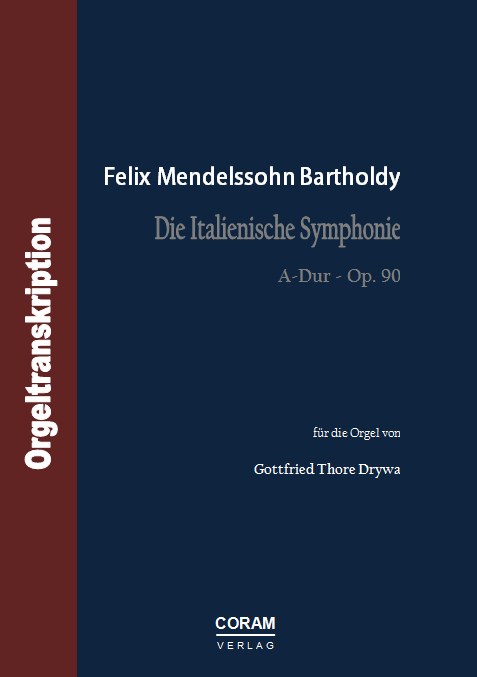
Felix Mendelssohn Bartholdy Italian Symphony Op. 90 | transcription for pipe organ | Coram 2009
Felix Mendelssohn Bartholdy's Italian Symphony (No. 4 in A major, Op. 90) is a four-movement symphony inspired by his journey to Italy in 1830–1831 and renowned for its bright, optimistic character. It is one of Mendelssohn's most frequently performed works. For the organ transcription, an early Romantic instrument, such as one of Buchholz's organs, is often sufficient. Nevertheless, alongside a tonal affinity with Mendelssohn's organ sonatas, the transcription requires a manual compass to g3 and, because of the key, preferably even to a3. The movements develop from these impressions: an energetic opening movement, a dignified Andante, a noble minuet, and a swift, folk-inspired Saltarello finale. The work was premiered in London in 1833, but Mendelssohn was dissatisfied with the result and later revised it, ultimately leaving the revision unfinished.
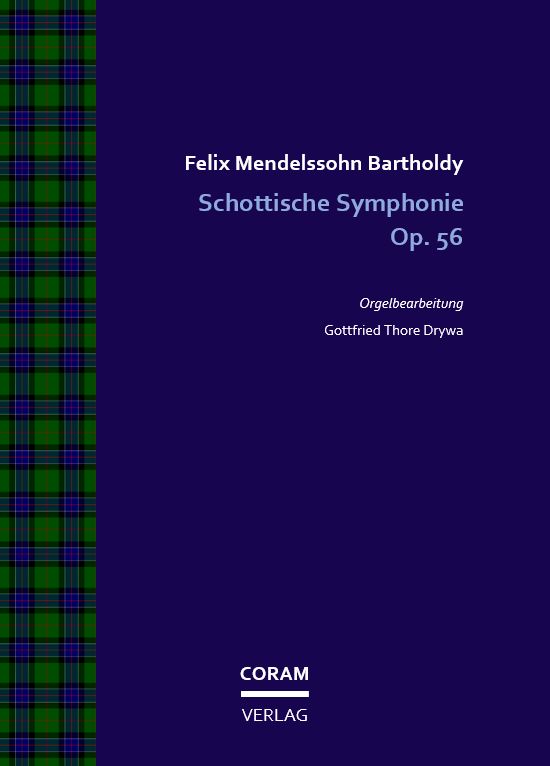
Felix Mendelssohn Bartholdy The Scottish Symphony Op. 56 | transcription for pipe organ | Coram 2025
Felix Mendelssohn Bartholdy's Scottish Symphony (No. 3 in A minor, Op. 56) is a Romantic symphony begun after his journey to Scotland in 1829 and completed in 1842. Its movement structure and treatment of the orchestra reveal a distinctly organ-like conception. This is also reflected in the fact that the third movement, for example, was already transcribed for organ in the early twentieth century. Organ transcriptions of Mendelssohn's symphonies therefore possess a certain tradition of their own. The requirements placed on the organ are greater here, in particular because a chamade division should ideally be available. This is especially important in the third movement itself, but it is also essential for shaping a convincing dynamic profile of Mendelssohn's symphonic orchestra. A fourth manual is also desirable in order to achieve a more consistent separation and transparency of voices and tonal colours. In terms of difficulty, this transcription is considerably more demanding than the Italian Symphony.
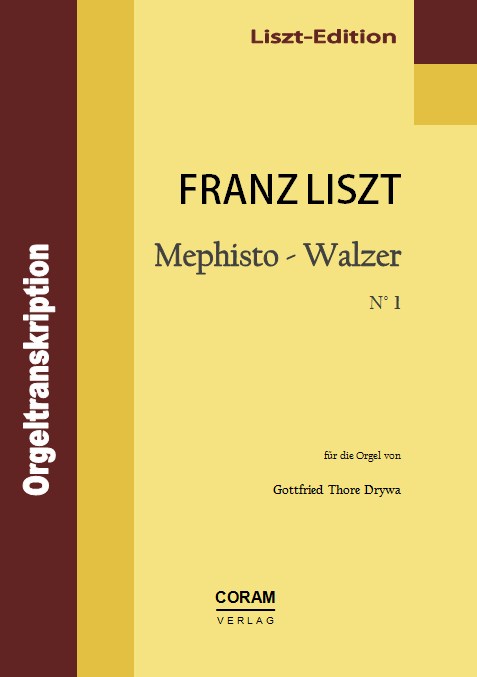
Franz Liszt Mephisto Walzer N°1 | Coram 2011
Franz Liszt's Mephisto Waltz No. 1 is a virtuoso work and, for some performers, certainly among Liszt's most difficult pieces. Here, too, the organ transcription is amply justified by the existence of orchestral versions, which show that alongside the virtuosic piano sonority Liszt himself also envisaged a more colourful interpretation of the sound world. That is precisely the point of this organ transcription. Beyond its purely pianistic demands, it is concerned with tonal variety and colour, drawing from the organ everything the instrument has to offer. In addition to a full manual compass to c4 and a pedal compass to g1 — both virtually indispensable — it requires an orchestral instrument with numerous string stops and imaginative tonal possibilities.
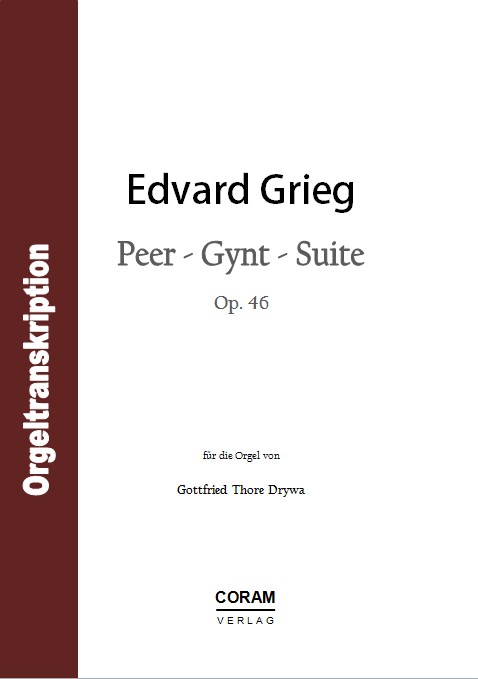
Edvard Grieg Peer Gynt Suite Op. 46 | Coram 2008
Peer Gynt Suite No. 1, Op. 46 is one of the most frequently performed works in the history of music, and this musical narrative can also be interpreted wonderfully on the organ. In individual details, orchestration will naturally always depend on the performer's personal preferences. In this sense, the present transcription adds a number of personal listening experiences to the countless arrangements already made for almost every instrument. That is precisely what organ transcription is about. The demands placed on the instrument vary considerably according to the concert situation and call more for the imagination of the performer than for any specific type of organ. Orchestral colours — such as a convincing, perhaps even free-reed clarinet and a room-filling tutti — should be available.